
about

Alexandre Barré, creator of Ab Ocarinas, welcomes you!
My beginnings
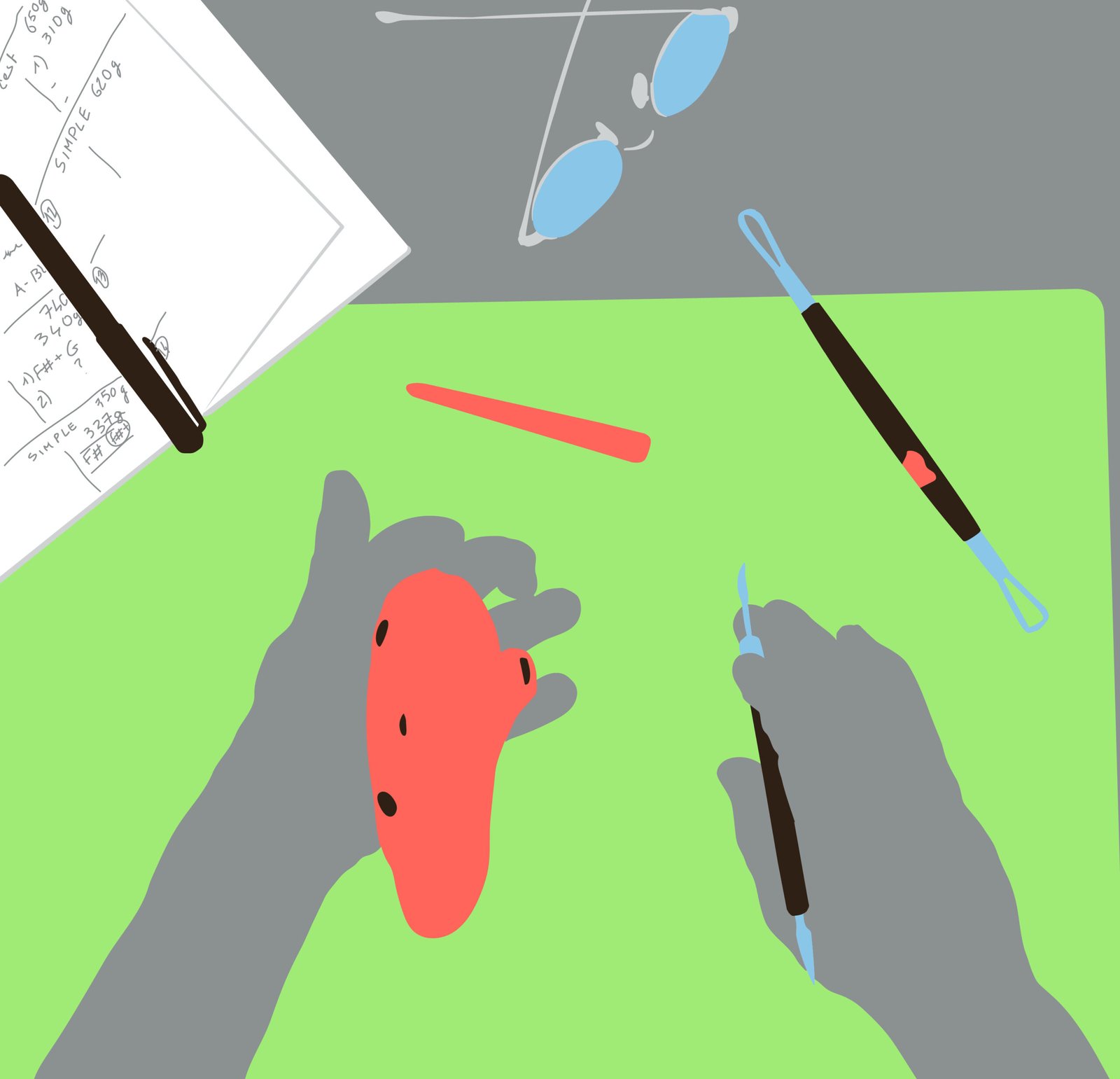
An artisan, passionate musician, and trained visual artist, I have been crafting ocarinas since 2022. My journey began after discovering the Japanese shakuhachi and attempting to reproduce it in ceramic—only to realize how complex and fascinating the making of ceramic wind instruments truly is.
I owe the start of my learning process to Madoka Tsugami, a Japanese ocarinist who, beyond producing stable and well-established instruments, continues to experiment and push her own limits. Her advice and our many exchanges continue to this day, transforming what might seem like a solitary craft into a collaborative research process.
My instruments
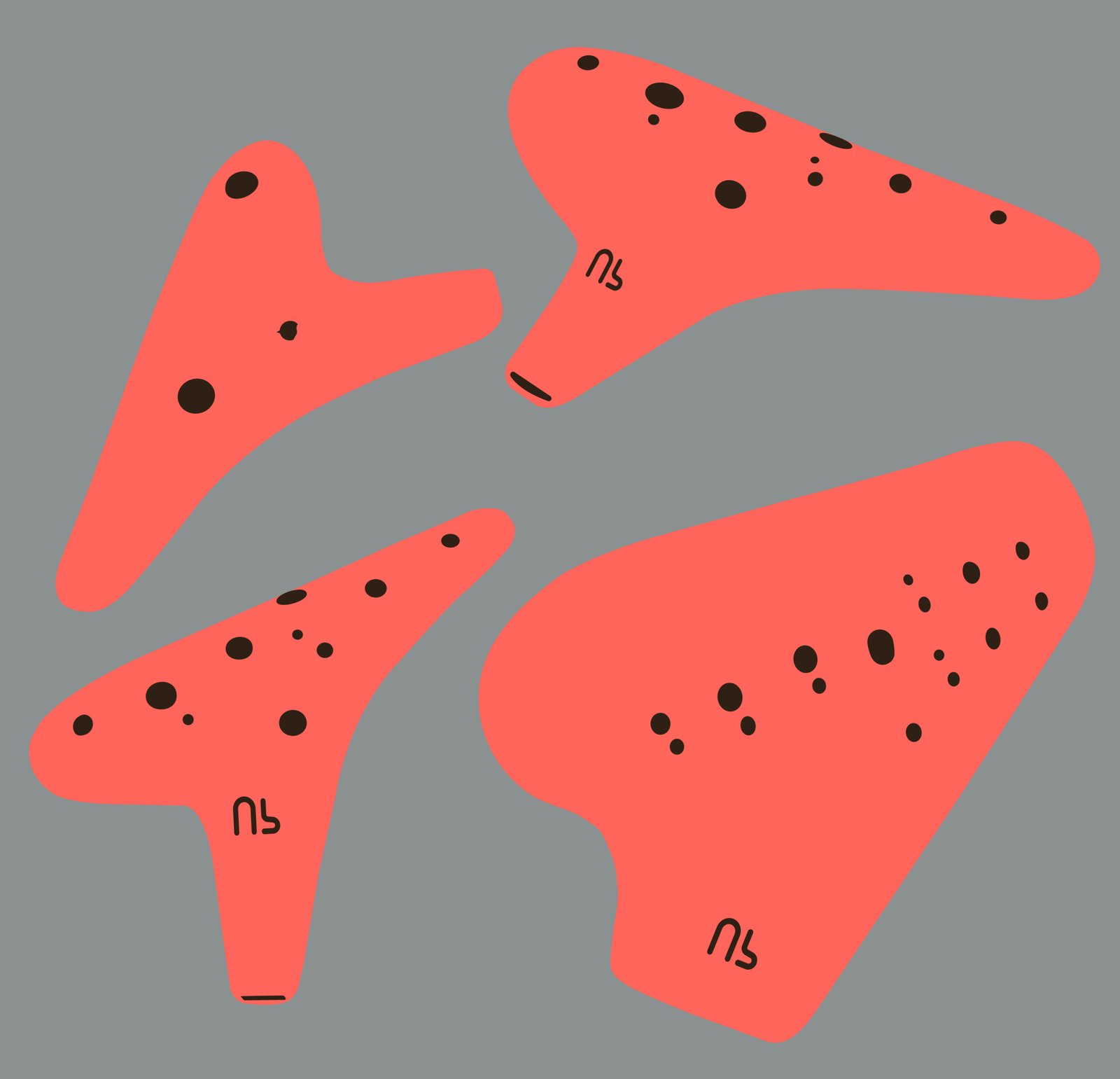
My search for an ideal sound is guided by two main requirements. The first is the ability to play in an apartment while keeping the volume reasonably tolerable for neighbors. Indeed, ocarinas are often designed for outdoor playing or stage performance without amplification, whereas I aim to create instruments that are slightly quieter.
The second requirement is the ability to play both Baroque and jazz repertoire—two styles I am particularly fond of—which demand high agility and speed of execution.
Tuning & breath curve
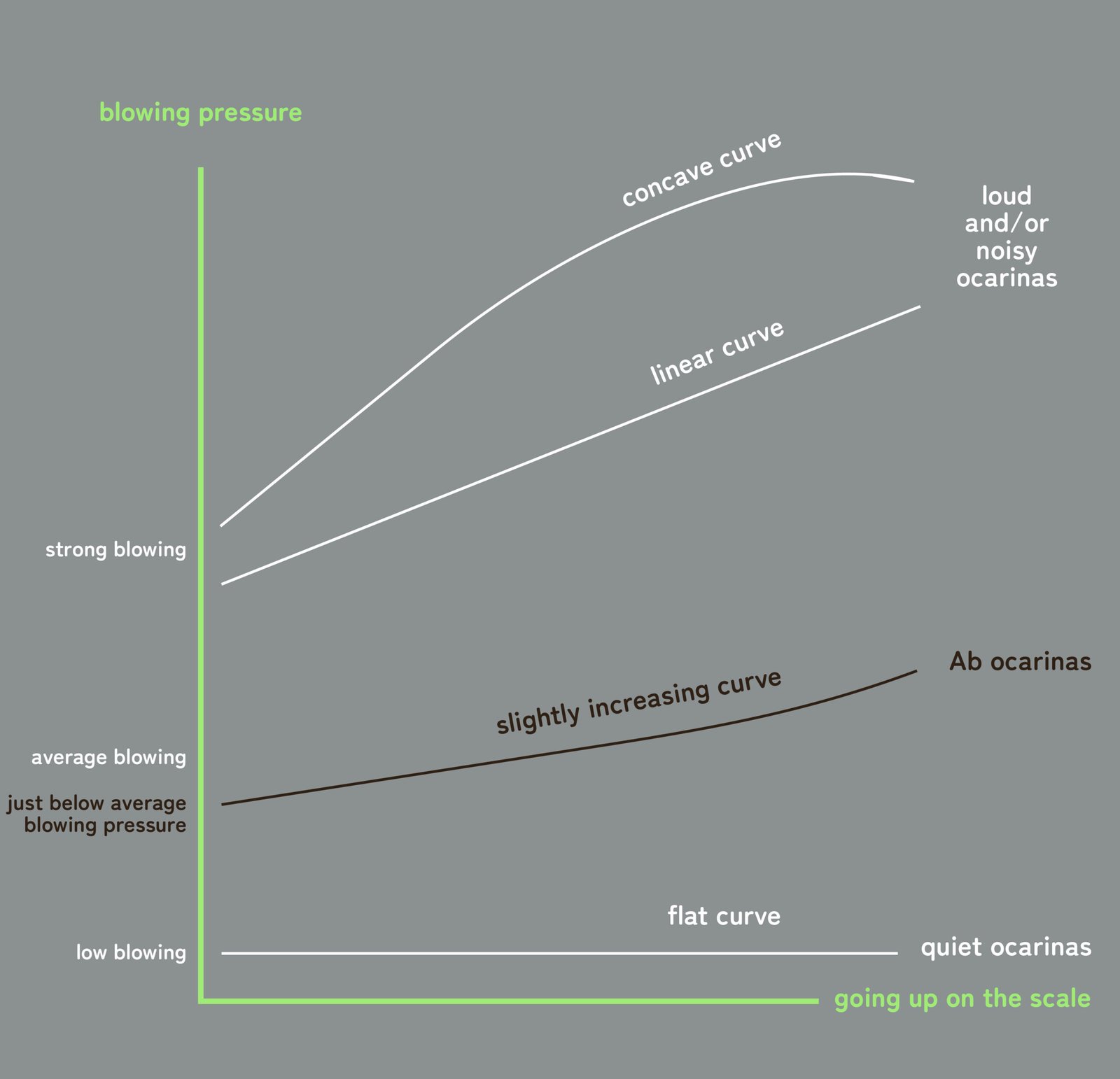
To meet my expectations of stability and playability, I tune my ocarinas with a relatively flat breath curve. For example, on a single-chamber C ocarina, from low A (A4) to high C (C6), the breath pressure required remains exactly the same. To reach F6, only a very slight increase in breath is needed, especially to achieve a clean tremolo on sustained notes.
Blowing pressure—distinct from the breath curve—also varies from one maker to another. It refers to how strongly one must blow to produce the instrument’s fundamental pitch. My instruments are designed with relatively gentle blowing pressure, allowing players to avoid fatigue when playing fast passages or long phrases without breathing.
Acute bend?
Ocarinas are resonance chambers (based on the Helmholtz principle) with a limited range. It is not possible (as far as we know) to change octaves by modifying breath pressure or to exceed a certain pitch range. This is why most single ocarinas have 10, 11, or at most 12 holes, and why double, triple, or even quadruple ocarinas exist—to combine multiple chambers and achieve a range comparable to 3 or 4 octaves.
The acoustic limitations of a single ocarina often become apparent when attempting the highest notes, where the sound may lose clarity or disappear entirely. This is usually due to tuning issues, design factors, or precision in the windway and voicing.
One technique can significantly improve high notes: the acute bend. By tilting the chin toward the chest, the high notes are more likely to sound clearly. However, the true quality of an ocarina lies largely in its ability to produce clear, accurate high notes without relying on this technique.
My ocarinas do not require acute bending to achieve clear and accurate high notes. I take my time and experiment extensively to create instruments that are stable across the full range, without compromising either the lows or the highs.